2026 Community-Engaged Research Symposium
Spotlighting the Value of Community-Engaged Research
Symposium Quick Facts
- 300 Attendees
- 37 Community-Engaged Research Posters
- 40 Community Based Organizations
- 100 Academic Research Partners/Institutions
On July 30th, 2026, over 300 people attended the Community-Engaged Research Symposium, a 4-hour virtual event hosted by the Community-Led Research Coordination Center (C3). C3 is a national coordination center funded through the National Institutes of Health's (NIH) Common Fund that develops and shares resources relevant to building research capacity in community-based organizations to support community-engaged intervention research to improve population health. The Dornsife School of Public Health at Drexel University serves as the home for the Coordination Center in partnership with the University of New Mexico College of Population Health and the Department of Population Health at Virginia Tech.
Under the theme “Advancing the Science and Practice of Community-Engaged Research,” researchers, community leaders, and funders exchanged ideas through nearly a dozen presentations and a virtual poster session showcasing over 35 examples of community-engaged research.
Keynote: Al Richmond, Community-Campus Partnerships for Health
The event began with a welcome from C3 MPI Jan Eberth and a keynote presentation from Al Richmond, Executive Director of the Community-Campus Partnerships for Health (CCPH), a nonprofit membership organization that promotes community-academic partnerships for health-related research. He spoke about the “Journey to Change” in including community voices in research and the decisions it informs, and the importance of leveraging and sustaining authentic strategic partnerships for conducting effective community-engaged research. (See Figure 1).
Figure 1
Elements of Authentic Partnership
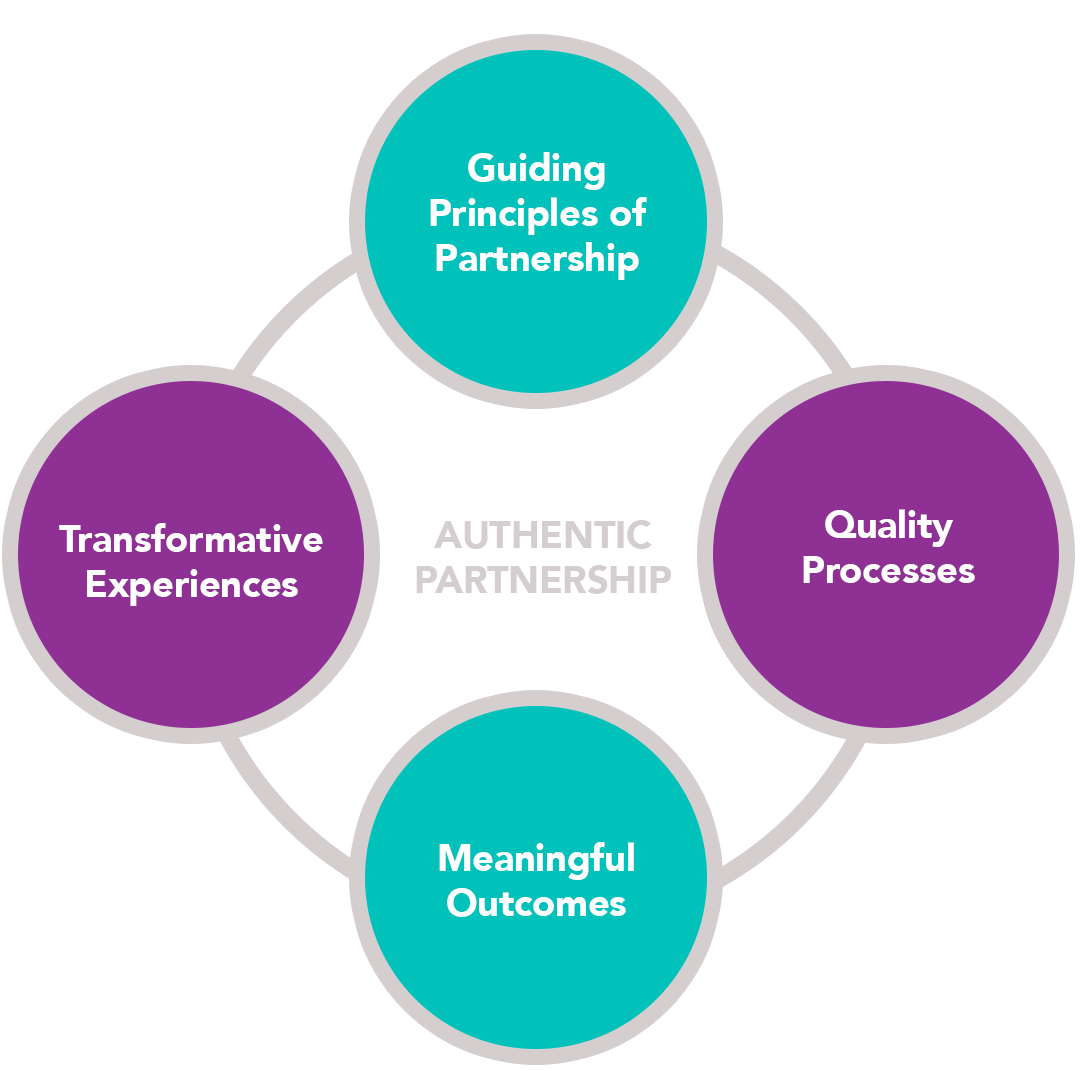
Note. CCPH Board of Directors, Position Statement on Authentic Partnerships, Community-Campus Partnerships for Health, 2013.
He pointed to the Research Leadership Academy (RLA) as an example. A part of the North Carolina Community Engagement Alliance (NCCEAL), the RLA is a course for community leaders and organizations to deepen their capacity to develop and conduct research that addresses local health priorities and apply these lessons directly to grant applications. Based on the experience of CCPH he stressed 3 key areas that will determine the future directions of community-engaged research through the experience of the CCPH and its work:
- An explicit focus on decision-making processes and who's perspectives are represented in research questions and study design
- Importance of research driven by the people who are most impacted by health disparities
- Data that informs community and institutional decision-making
Community-Engaged Research Symposium Keynote
Building Evidence Together: Reflections from Community and Academic Partners
Following a robust Q&A with Richmond focused on trust, access to resources, and supporting rigor and reproducibility in community-engaged research, attendees convened for a panel moderated by C3 MPI Amy Carroll-Scott titled “Building Evidence Together: Reflections from Community and Academic Partners”. The purpose of this session was to hear from the experiences of community organizations and their researcher partners.
We heard from Soccer Without Borders, an internationally recognized organization that advances youth mental health and community connection through sport, and their collaboration with their academic partners at the University of California, San Francisco (See Figure 2).
We also heard from the Montana Consortium for Urban Indian Health, which represents Montana Urban Indian Organizations and the communities they serve - with support from their research partners JG Research and Evaluation - through interconnectedness, resource sharing, and advocacy, with a commitment to sustainability.
Finally, we heard from Cultura y Arte Nativa de las Americas: CANA and their academic partners at UC Riverside and UC San Francisco. They discussed their Promotoras-based intervention focused on cultural healing practices to improve mental health outcomes for communities in the San Francisco Bay area.
The themes that emerged from the panelists' presentations and the discussion that followed centered on trust as the foundation of successful community-engaged research, from the relationships and shared values that initiated these collaborations to the sustained trust required for authentic, equitable partnerships over time. Panelists emphasized that meaningful engagement built on trust goes beyond consultation, positioning community partners as co-designers of research who shape study questions, intervention development, implementation, and interpretation of findings. A second theme was the importance of building and sharing resources, including funding opportunities, workforce development, research training, and data infrastructure, in ways that strengthen community capacity while also improving the quality, relevance, and rigor of the research. Finally, panelists highlighted the need to balance scientific requirements with community priorities, navigating challenges related to study design, data governance, sustainability, and institutional processes while maintaining flexibility, cultural responsiveness, and a focus on outcomes that matter to communities.
Figure 2
The Community Health Ecosystem
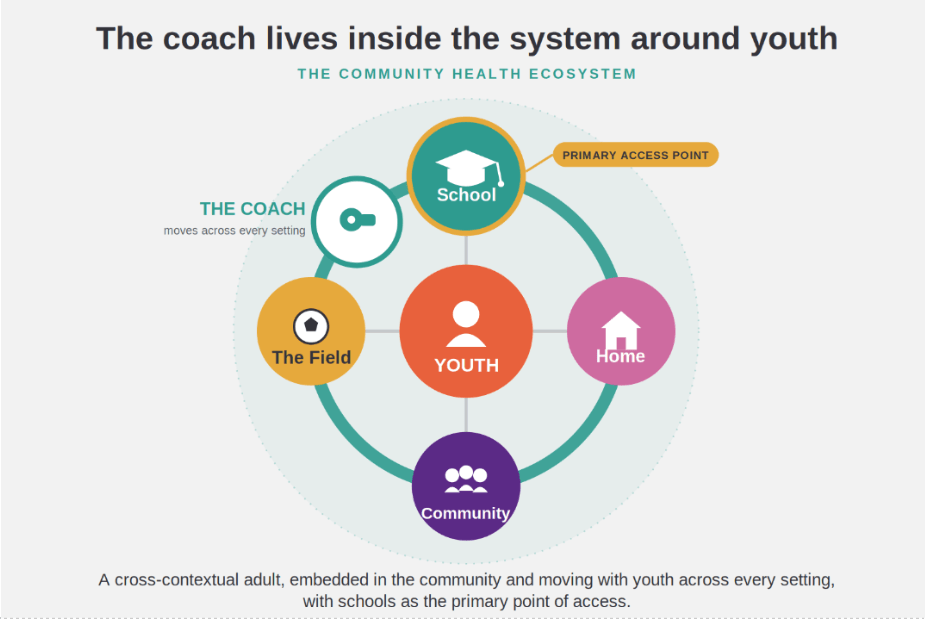
Note. This model was presented by the Meet me on the Pitch team from Soccer Without Borders and the University of California, San Francisco during their presentation on An integrated behavioral health and soccer intervention for youth.
Community-Engaged Research in Action
After a short break, attendees reconvened for concurrent virtual sessions. Nine teams presented during 3 sessions covering “Community-Engaged Research in Action.” Session topics included:
Designing and Implementing Interventions
“Designing and Implementing Interventions” showcased Community Engagement Alliances (CEAL) in Florida, California, and North Carolina.
In Florida, community partners and researchers from six Florida academic institutions, implemented over 250 outreach activities including panel discussions, webinars, targeted media outreach, and in-person vaccination events to improve COVID-19 education and awareness. FL CEAL also created a curriculum that was used to train community health workers in Florida, California, and Texas.
Similarly in California, the intervention began as a COVID-19 response. California CEAL has now evolved into a state-wide technical assistance (TA) program that supports CBO leadership and staff in providing innovative social-needs care (See Figure 3).
In North Carolina, members from NCCEAL implemented the Med South Lifestyle Program (MSLP), a culturally responsive and evidence-based dietary program for adults in the rural south. NCCEAL converted MSLP materials into an effective Community Health Advocate training curriculum to increase program participant engagement. After attending this session, one attendee shared:
“The most useful knowledge I gained was a stronger understanding of how community engagement can be intentionally incorporated into the design and implementation of interventions. The symposium reinforced the importance of developing interventions with community partners rather than simply for communities, while considering real-world implementation factors such as feasibility, adaptability, sustainability, and community priorities.”
Figure 3
From COVID Response to a Statewide Model
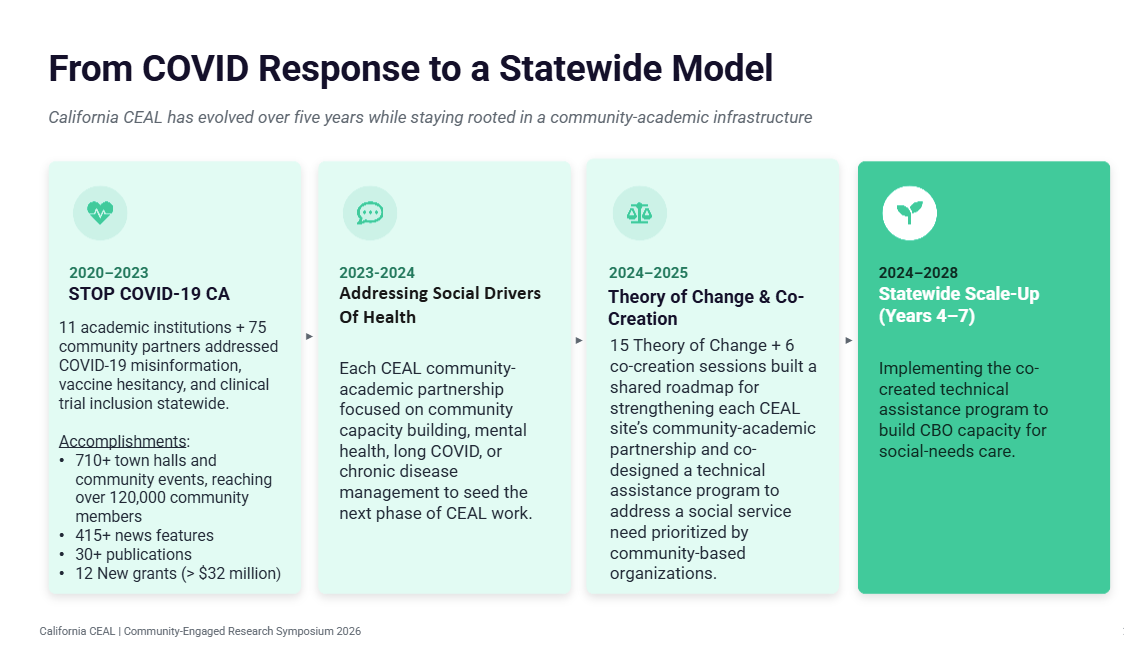
Note. This model was presented by the California CEAL Team during their presentation on A California Consortium to Enhance Social Needs Care for Individuals Facing Economic or Access-Related Constraints, including Populations with Limited Service Access.
Studying Health Impacts of Community Interventions
“Studying Health Impacts of Community Interventions” showcased work from the University of California, Irvine (UCI) Institute for Clinical and Translational Sciences, ERASE-KD: NAVIGATE, and Grupo Nexos, Inc.
At UCI, community partners and researchers presented a community-based approach to the development of a palliative care model for families of children with cancer. This model seeks to study the impacts of interventions focused on culturally grounded care, health literacy, and caregiver & family emotional distress to improve family experience and cancer outcomes (See Figure 4).
The presentation from the ERASE-KD: NAVIGATE team, presented how similar community-engaged research informed the development of the Navigate-Kidney randomized clinical trial. By implementing a culturally responsive and patient-centered protocol to support patient needs, the ERASE-KD team highlighted the effectiveness of Community-Health Workers in reducing interdialytic weight gain (IDWG) among individuals receiving hemodialysis.
The Grupo Nexos, Inc. team presented on PR CARIBhE: Puerto Rico Collaborative Approach Research Innovation and Behavioral Health Engagement. Grupo Nexos employs a Collective Impact framework to implement a multi-level intervention focused on improving behavioral health outcomes among Puerto Rico youth, fueled by persistent childhood poverty.
One attendee commented:
“I especially enjoyed this event. It gave me opportunities to engage with the attendees who came to my session and meet other industry experts I wouldn't have met otherwise”
Figure 4
Intervention Components
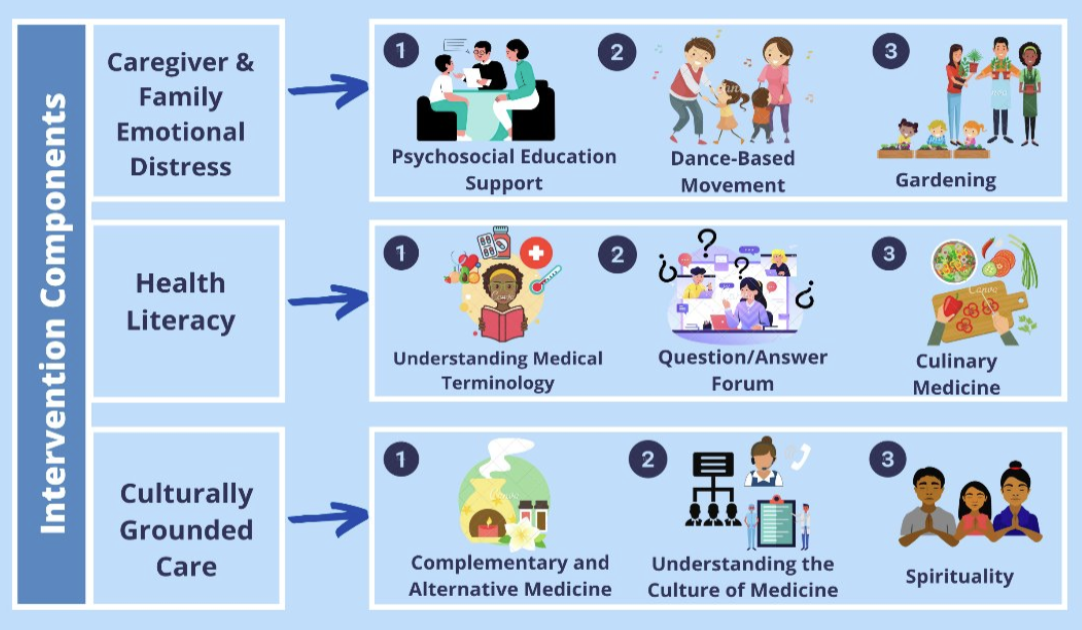
Note. This model was presented by the Center on Stress & Health from the UC Irvine Institute for Clinical and Translational Sciences during their presentation on A Community-Based Approach to the Development of a Palliative Care Model for Latinx Families of Children with Cancer.
Building Successful Community- Academic Partnerships for Community-Engaged Research
“Building Successful Community-Academic Partnerships for Community-Engaged Research” showcased work from the Community Alliance for Research Engagement (CARE), the Virginia Cooperative Extension, and the A.J. Drexel Autism Institute.
The CARE presentation focused on the Yale Community Research Fellowship, which trains and builds a network of community members to collaborate as research partners with communities that experience the greatest health disparities.
The Virginia Cooperative Extension showcased a model for a statewide system of partnerships that connect research, education, and outreach to improve public health and health-related outcomes in diabetes management, opioid abuse prevention, and food systems access (See Figure 5).
Researchers at Drexel presented lessons learned from the PCORI CAPBID Project, which is comprised of an Autistic-led team to advance community-engaged approaches and priorities for Applied Behavioral Analysis-related research through intentional partnership building, inclusive practices, and shared decision-making. One attendee noted:
“It was great to hear from academic partners who truly value the voice of community partners.”
Figure 5
Health Extension Model
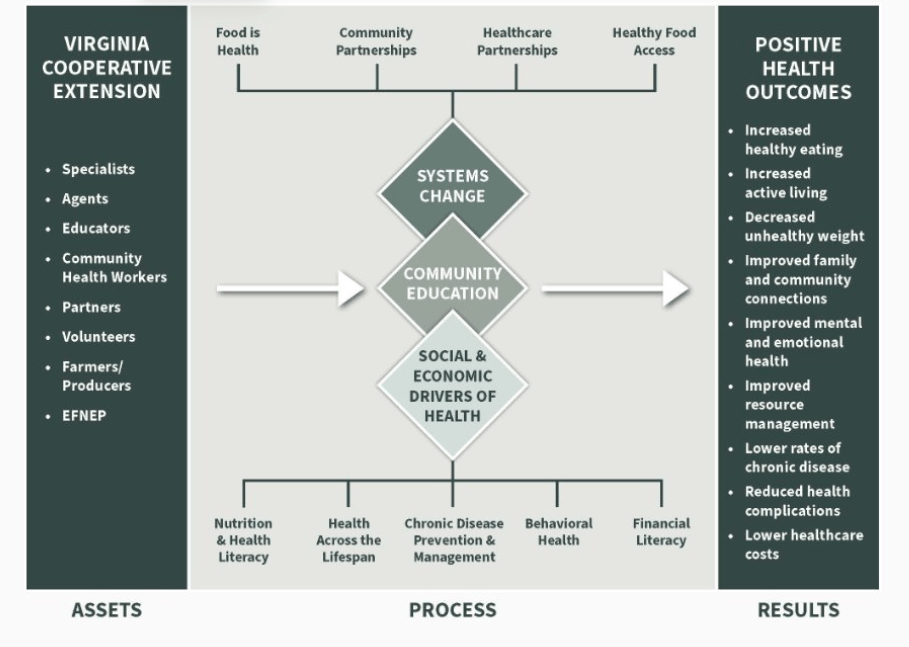
Note. This model was presented by the Virginia Cooperative Extension during their presentation on Advancing Community Health through Research, Education and Outreach.
Closing
Closing remarks were given by Nina Wallerstein of the University of New Mexico, an internationally recognized leader in Community-Based Participatory Research (CBPR) frameworks and implementation. Her remarks reflected a central theme of the event: that shared leadership is essential to effective partnership. Nina reflected on symposium presentations that highlighted examples of the importance of communities leading the research, identifying their priorities, making decisions with their partners, and, most importantly, contributing their desired outcomes. Partnership best practices depend on authentic community involvement.
Community-engaged research remains critical to advancing health in the United States. Events like this symposium increase exchange and collaboration across teams facilitating the learnings and partnerships needed to continue to advance the field in ways that translate into meaningful health improvements for all.
Once the symposium concluded, there was a palpable sense – even virtually – of optimism and innovation in the field of community-engaged research. One attendee noted:
"The sessions were great and the vibes were even better. I actually met so many amazing people through the app discussion threads and messages."
More from C3
Subscribe to the C3 to receive the latest updates, news, and events from the field of Community Engaged Research.